Concrete questions
Concrete Patio FAQ for York County Homeowners
Practical guidance for planning patios, driveways, walkways, steps, and other residential concrete work.
Planning and estimates
What information should I send for an estimate?
Send the project address, approximate dimensions, current-site photos, preferred finish, access information, and details about demolition, steps, walkways, or structures connected to the work.
Do you need to see the property before final pricing?
Many projects require a site review to confirm access, elevations, drainage, removal, and scope. Initial information and photos help determine the appropriate next step.
How should I choose the patio size?
Lay out the dining table, chairs, grill, lounge seating, doors, and walking paths. A patio should be sized around those clearances rather than an arbitrary square-foot target.
Construction details
How thick is a typical concrete patio?
Four inches is common for pedestrian patio use. Site conditions, intended loads, and the final project specification can change that requirement.
Why does the stone base matter?
A properly prepared and compacted base helps create uniform support below the slab and is one part of managing movement and freeze-thaw conditions.
Will concrete crack?
Concrete is not crack-proof. Base preparation, reinforcement, control joints, water management, placement, and curing are used to reduce and manage cracking risk.
How long does concrete take to cure?
Concrete gains strength over time. Walking, furniture placement, vehicle traffic, sealing, and other use should follow the project-specific curing guidance rather than one universal timeline.
Finishes and maintenance
What is the difference between broom and stamped concrete?
Broom-finished concrete uses a uniform textured finish for practical traction. Stamped concrete adds patterns and typically color accents to create a decorative stone-inspired appearance.
Does stamped concrete get slippery?
Some sealed surfaces can be slick when wet. Texture, sealer selection, application rate, and a slip-resistant additive should be considered for exposed surfaces.
How often should stamped concrete be resealed?
There is no single schedule for every surface. Exposure, traffic, product, appearance, and the condition of the existing sealer should guide maintenance timing.
Real project portfolio
Concrete answers are easier to understand with real examples
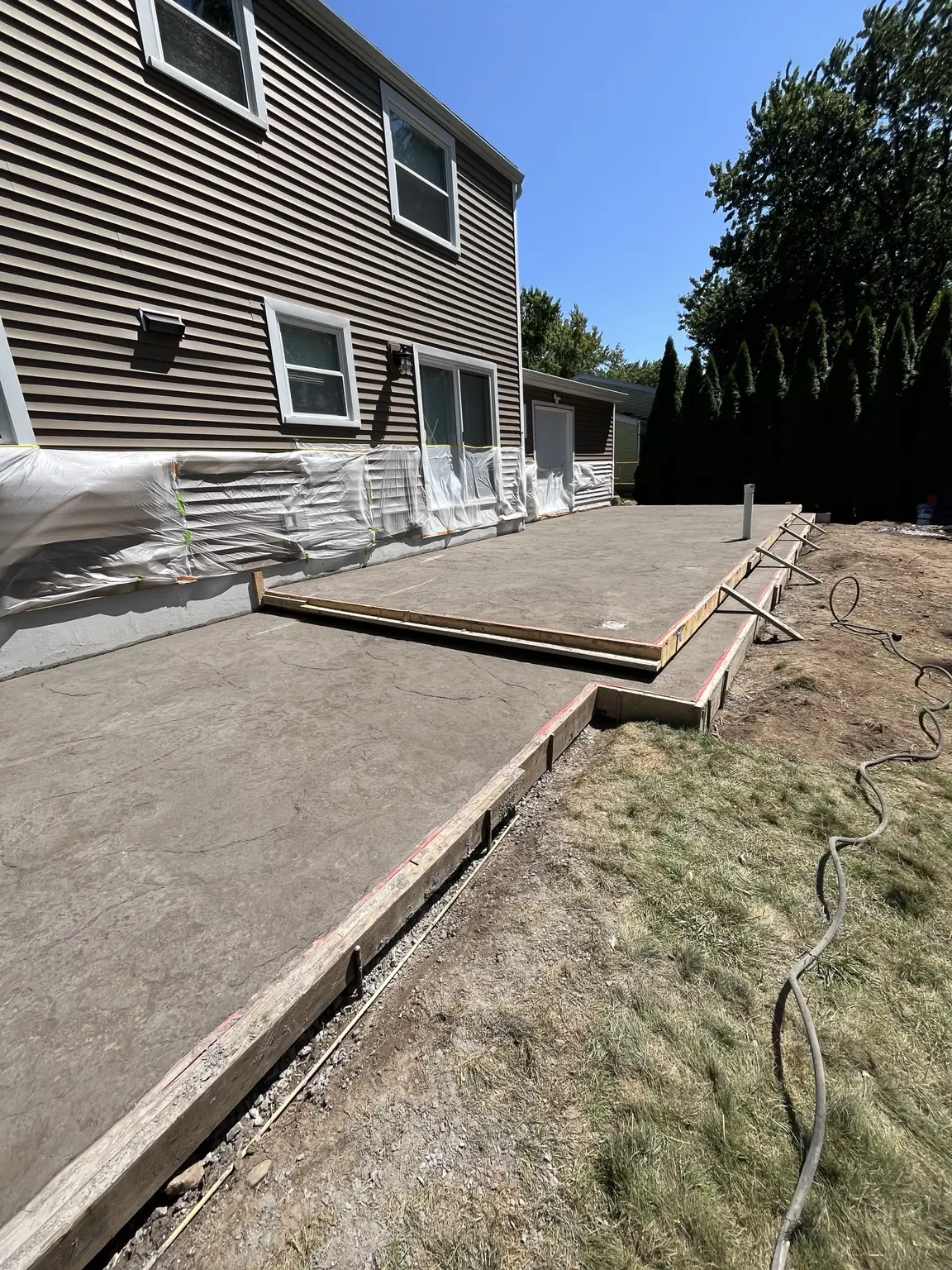
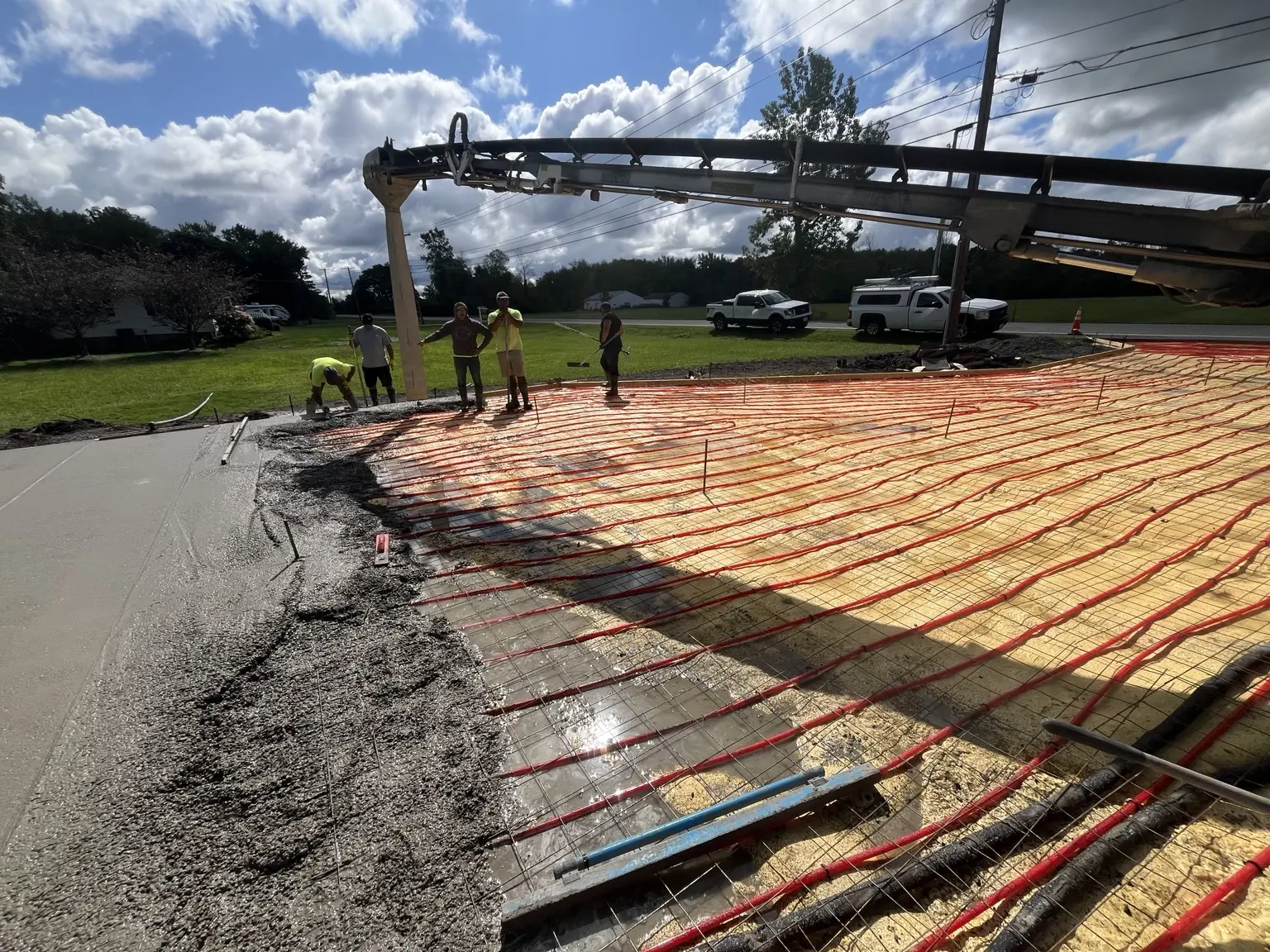
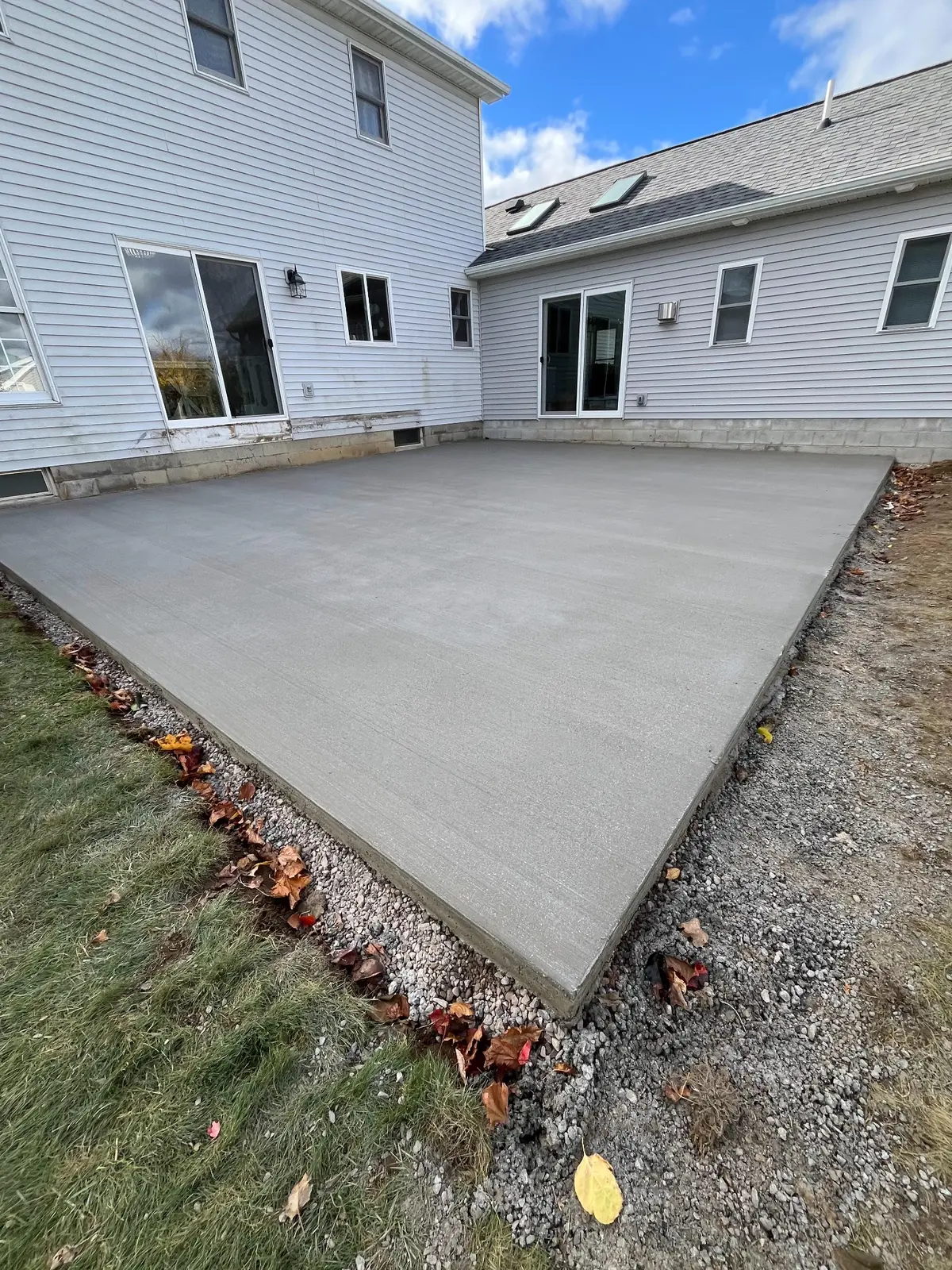
These photos show finished surfaces and preparation work from our concrete team’s shared project portfolio.
Start your estimate
Tell us what you want to build.
Share the address, approximate dimensions, finish ideas, and photos of the current space.