Finish selection
Stamped vs. Broom-Finished Concrete Patios
Stamped and broom-finished concrete begin with many of the same structural decisions, but they create different surfaces and ownership routines. The right choice depends on how much decorative detail you want, how the patio will be used, and how willing you are to maintain a sealed finish.
Our verdict
Choose broom finish for simplicity; choose stamped concrete for a deliberate decorative upgrade.
For most low-maintenance York patios, a consistent broom finish is the safest default. Stamped concrete is worthwhile when stone-inspired texture and coordinated color are central to the design and the owner accepts periodic cleaning, inspection, and appropriate resealing.
What the two finishes actually are
A broom finish is produced by drawing a concrete broom across the fresh surface at the correct stage of finishing. It creates fine parallel texture and is widely used for exterior flatwork. Consistency depends on timing, moisture at the surface, broom type, direction, and technique. It may look simple, but uneven texture or finishing water can still create a poor result.
Stamped concrete is textured with mats or skins while the concrete remains workable. A complete decorative system may include integral color, a surface accent or release, pattern alignment, hand detailing at edges, washing, and sealer. The pattern does not turn concrete into individual stones; it remains a slab, so the joint and crack-management plan still matters.
Appearance and design control
Broom-finished concrete is visually quiet. Shape, edges, joints, steps, and surrounding landscaping carry the design. That restraint works well with brick, siding, and natural stone because the patio does not compete with the house. It is also easier to add furniture, rugs, planters, and color without creating a busy composition.
Stamped concrete can support slate, ashlar, flagstone, seamless stone, or other texture families. We recommend selecting pattern scale around the patio size and permanent features. A large pattern may overwhelm a small landing, while too many borders or colors can make a large patio fragmented. Use the house as the palette: siding, masonry, roof, and trim are better anchors than a small internet swatch.
Traction, weather, and everyday use
Broom texture is a practical choice for exposed walking surfaces because it provides a direct, traction-oriented finish. Texture should still be comfortable enough for the intended use. Around bare feet, furniture, and play areas, an extremely aggressive broom is not automatically better.
Stamped texture adds relief, but sealed decorative concrete can become slippery when wet depending on the texture, sealer, application, wear, and contaminants. Discuss the sealer sheen and compatible traction additive before installation. Neither finish replaces drainage: standing water, snow, ice, and deicing practices deserve attention in York's winter climate.
Maintenance and repair expectations
A broom-finished patio normally emphasizes cleaning, monitoring joints, and protecting the surface from harsh chemicals or damaging winter practices. It does not rely on a glossy coating to look complete. Color variation, weathering, and minor surface changes may be less visually demanding on plain concrete.
Stamped work is commonly sealed to support color and surface appearance. Resealing should be condition-based, not an automatic heavy application on a calendar. The surface must be clean, dry, compatible with the product, and prepared correctly. Too much sealer or an incompatible product can create appearance and traction problems. Ask who documents the original system so future maintenance does not become guesswork.
How we make the selection
Start with function. If the priority is a durable, understated place for dining, grilling, and everyday traffic, our default recommendation is broom finish. If the patio is a central design feature and the owner values stone-inspired texture enough to maintain it, stamped concrete can be a strong fit.
Then compare both options on the same footprint and preparation scope. Do not let a decorative upgrade hide a reduction in base, curing, drainage, or joint planning. The slab's core decisions should remain sound in either finish. Finally, review a complete sample combination—pattern, color, accent, and sealer—not separate selections that have never been seen together.
Documented portfolio example
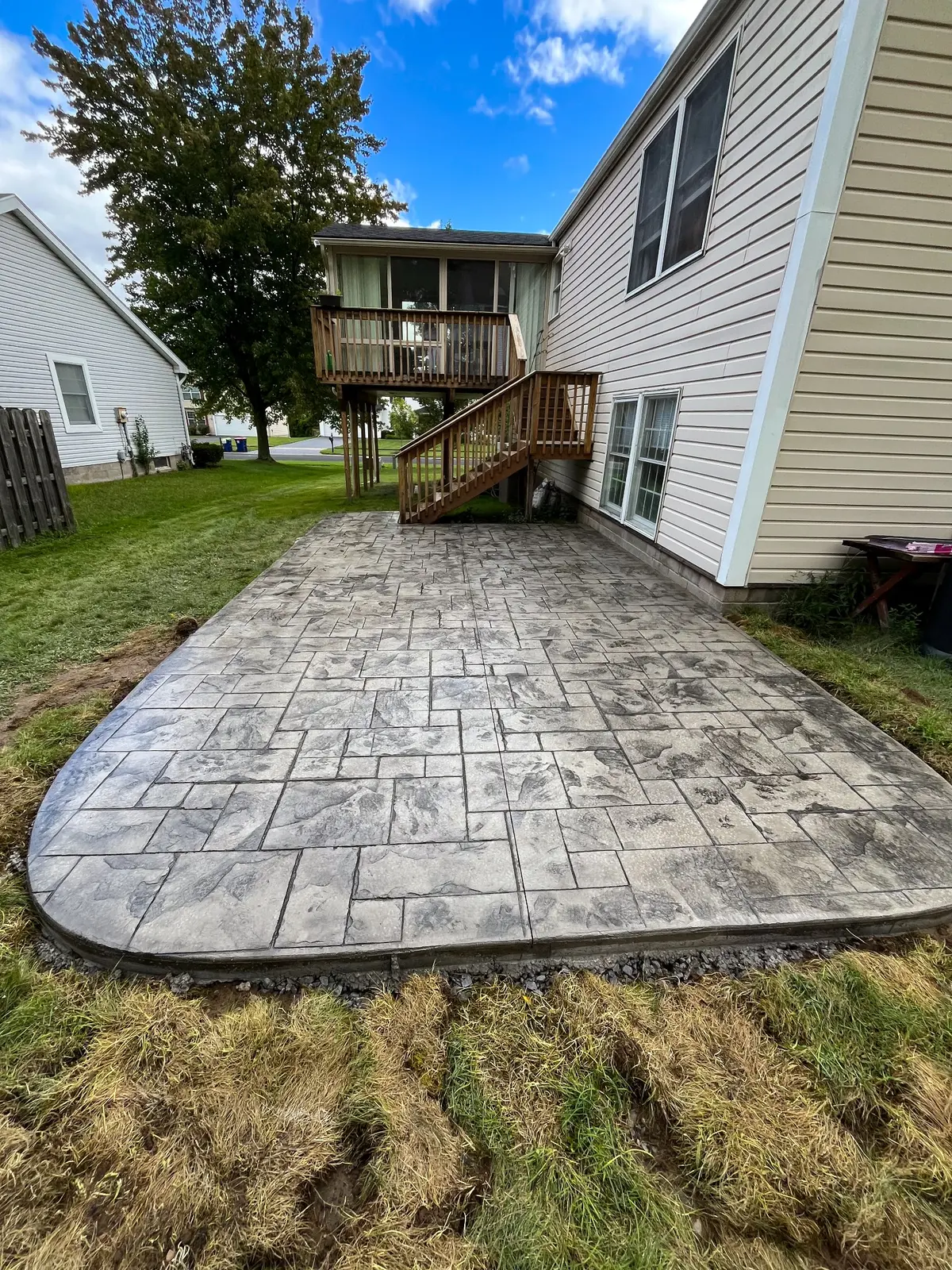
What this real project helps explain
The restrained single-pattern approach lets the curved edge and patio shape do part of the design work. For York homes, we would compare this decorative direction against a broom-finished sample using the same patio layout before pricing the finish upgrade.
Disclosure: This is a shared-team portfolio example. We identify the town only when the project location has been verified; otherwise we do not present it as York County work.
Primary sources
Read the technical guidance behind this article
These links are provided for homeowners who want to verify the underlying industry or government guidance. Final specifications still need to reflect the property, materials, weather, and applicable local requirements.
- CIP 14: Finishing Concrete Flatwork National Ready Mixed Concrete Association
Guidance on finishing sequence, surface water, edging, jointing, broom texture, and avoiding common finishing errors.
- CIP 11: Curing In-Place Concrete National Ready Mixed Concrete Association
Explains why moisture and temperature control after placement are important to strength and durability.
- Concrete in Practice resource library National Ready Mixed Concrete Association
Industry guidance covering placement, finishing, curing, cracking, weather, and other field topics.